


 15 / 24

BURKINA FASO
15
BURKINA FASO
Boulkiemdè Village Project
Characterised by semi-arid savannah and
forests, Burkina Faso is one of the world’s most
disadvantaged countries. Around 45% of its quickly
growing population lives on less than US$1.25 a
day. Access to sanitation and electricity is limited,
while inadequate investment in education and
infrastructure make any development gains hard to
maintain.
The country has a very weak education system
that faces many challenges. The literacy rate is
close to 36% with relevant disparities between men
(43%) and women (29,3%).
[4]
The situation is even
more dramatic if we consider the huge geographic
inequalities between urban and rural areas: school
attendance rates are five times higher in the region
surrounding the capital Ouagadougou in comparison
to remote rural areas. Moreover, even where different
educational opportunities are available, the quality of
teacher training is generally low and the education
system does not meet the needs of the population.
PISTORIO FOUNDATION’S PRESENCE IN THE COUNTRY
Context and Challenges
Partnering with Centro Italiano Aiuto All’Infanzia (CIAI), Pistorio Foundation decided to intervene in the country
in 2006 with an ad hoc project focused on the support of over 100 needy students from the rural area of
Boulkiemdé in western Burkina Faso.
The intervention had the ultimate goal of improving the enrolment rate in the region while providing basic
services to beneficiaries such as nutrition, hygiene training, and primary health care.
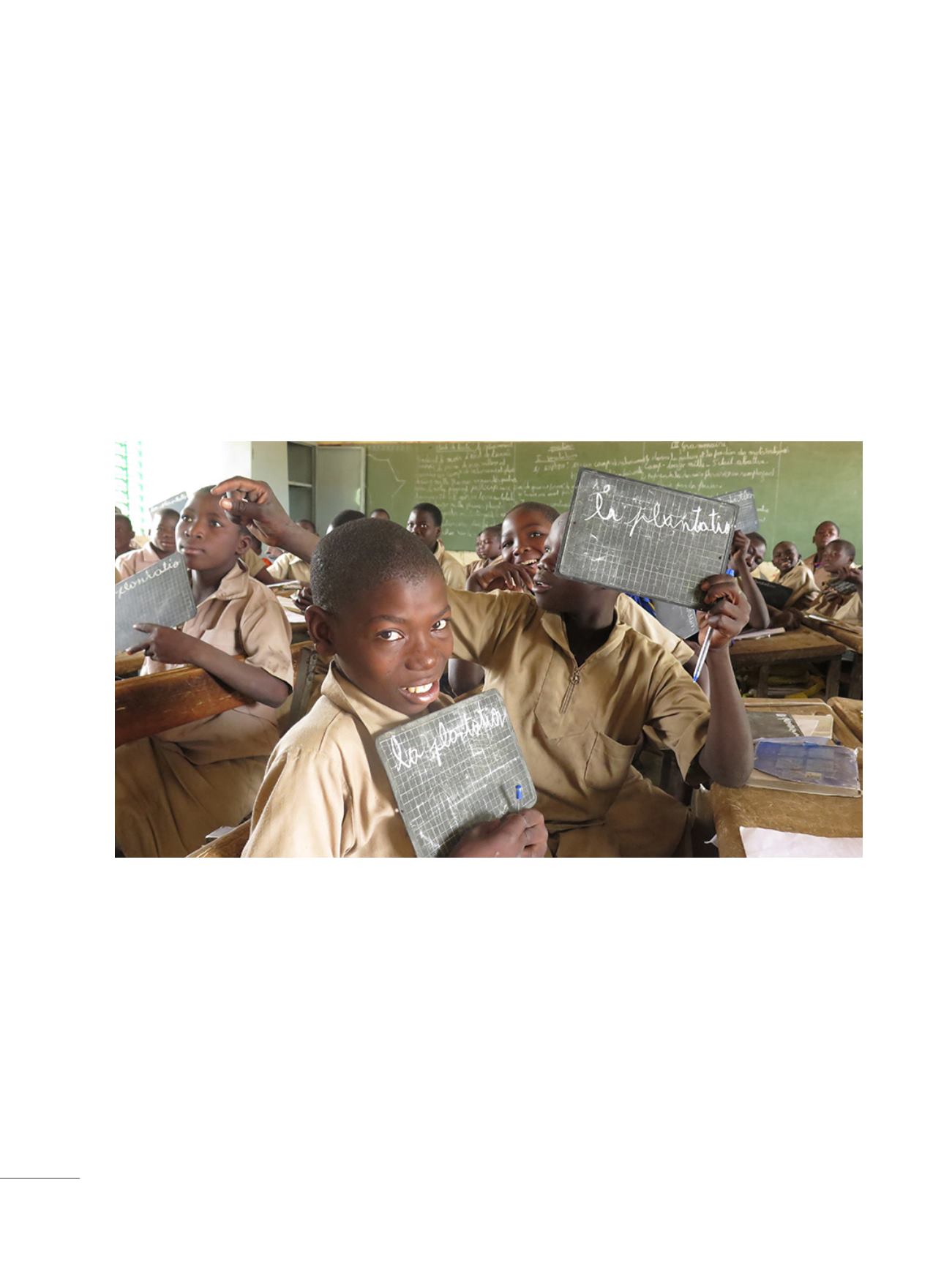
The project was completed in 2007 with the construction of relevant infrastructures in the Primary School of
Nibagdo: we doubled the size of the school in terms of classroom space and provided sanitation facilities,
kitchen and canteen to the existing buildings. Furthermore, after two years the Foundation significantly
improved the region’s secondary school education and enrolment rates by building a new secondary school
in the Sogpelcé village which opened with over 500 students. The school was further expanded in 2015 with
the building of three new classrooms, and upgrading of the electric and water systems.
4
For further details:
https://en.wikipedia.org/wiki/List_of_countries_by_literacy_rate