


 13 / 24

INTERVENTIONS AREAS
13
The presence of Pistorio Foundation in the country has strengthened year after year. Since the inception
of the program, we have been able to support over 3.000 hill-tribe minority children, supplying them,
through the scholarship program, school materials, meals, medical checkups, transportation to school, and
school fees as well as dormitory expenses where needed. In parallel, we have worked to improve school
infrastructures and general awareness on topics such as hygiene and health. This approach has helped
significantly improve the living standards of the communities we have worked with, contributing also to the
decrease of common illnesses in these villages.
In 2017, 1.160 students from 12 villages benefitted from our scholarship program, and relied on school
infrastructures that we have built, including primary and secondary schools, kindergartens, nurseries, teacher
accommodations, libraries, computer rooms, school kitchens and canteens, sanitation facilities, playgrounds,
etc.
Among the new activities introduced this year, we also launched a noodle making project at Huay Nam Khun
School, aimed at producing noodles for the canteen meals for students attending the school. We contributed
to the initiative by purchasing the required equipment and at present the students are collaborating and
helping in the kitchen to prepare their own food.
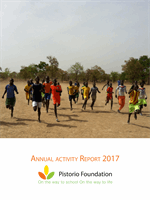
In addition, we promoted a new initiative at VBAC
professional school: a collaboration between the
parents of student beneficiaries currently studying
there and Pistorio Foundation for the maintenance
of the students’ dorms. We invited parents to join
students and staff for the up keeping of the dorms
and gardens during holiday breaks, getting them
involved in tasks such as cutting grass and pruning
trees.
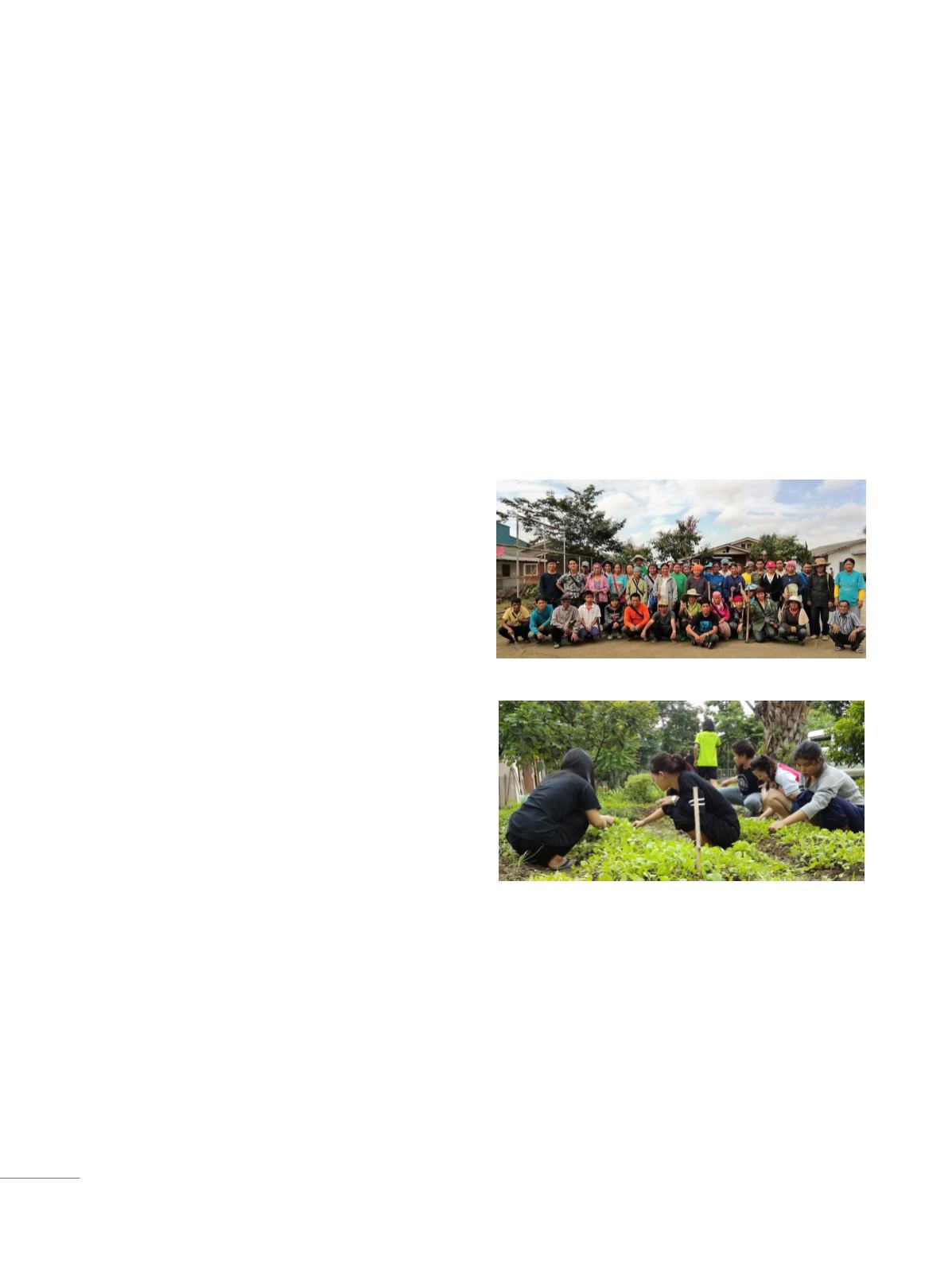
TSchool garden activities in a number of our
schools have continued this year. The idea behind
this program is to teach children how to cultivate
and produce food that can be consumed in
the school canteens. This program has several
objectives: introduction of students to agriculture
and the related skills that the students can
potentially further develop in the future to generate
a source of income; provide agricultural know-
how to students to empower the community;
raise awareness in villages and rural areas on the
importance of environmental protection and the use
of sustainable and organic agricultural practices that
respect the soil and the natural habitat.
•
Parents Givung a Helping Hand at VBAC
•
Students Working in the School Garden Project