


 12 / 24

INTERVENTIONS AREAS
12
Over the last 40 years, Thailand has made significant
progress in social and economic development,
moving from a low-income to an upper-income
country in less than a generation. As a direct
consequence, poverty has decreased steadily and in
30 years it has dropped from 67% to 7.2% in 2015.
However, poverty and inequality continue to pose
significant challenges. In fact, as of 2014, over 80%
of the country’s 7.1 million poor lived in rural areas
and an additional 6.7 million were living within only
20% above the poverty line and remained vulnerable
to falling back into poverty. As a result, growing
disparities in household income and consumption
characterise specific regions of the country with
large pockets of poverty remaining in the Northeast,
North and South. The right to education is still
baffled for children living in these areas and children
of ethnic minorities, migrants and refugees, who live
in impoverished remote regions.
INTERVENTIONS AREAS
THAILAND
Context and challenges
Chiang Rai Village Project
PISTORIO FOUNDATION’S PRESENCE IN THE COUNTRY
•
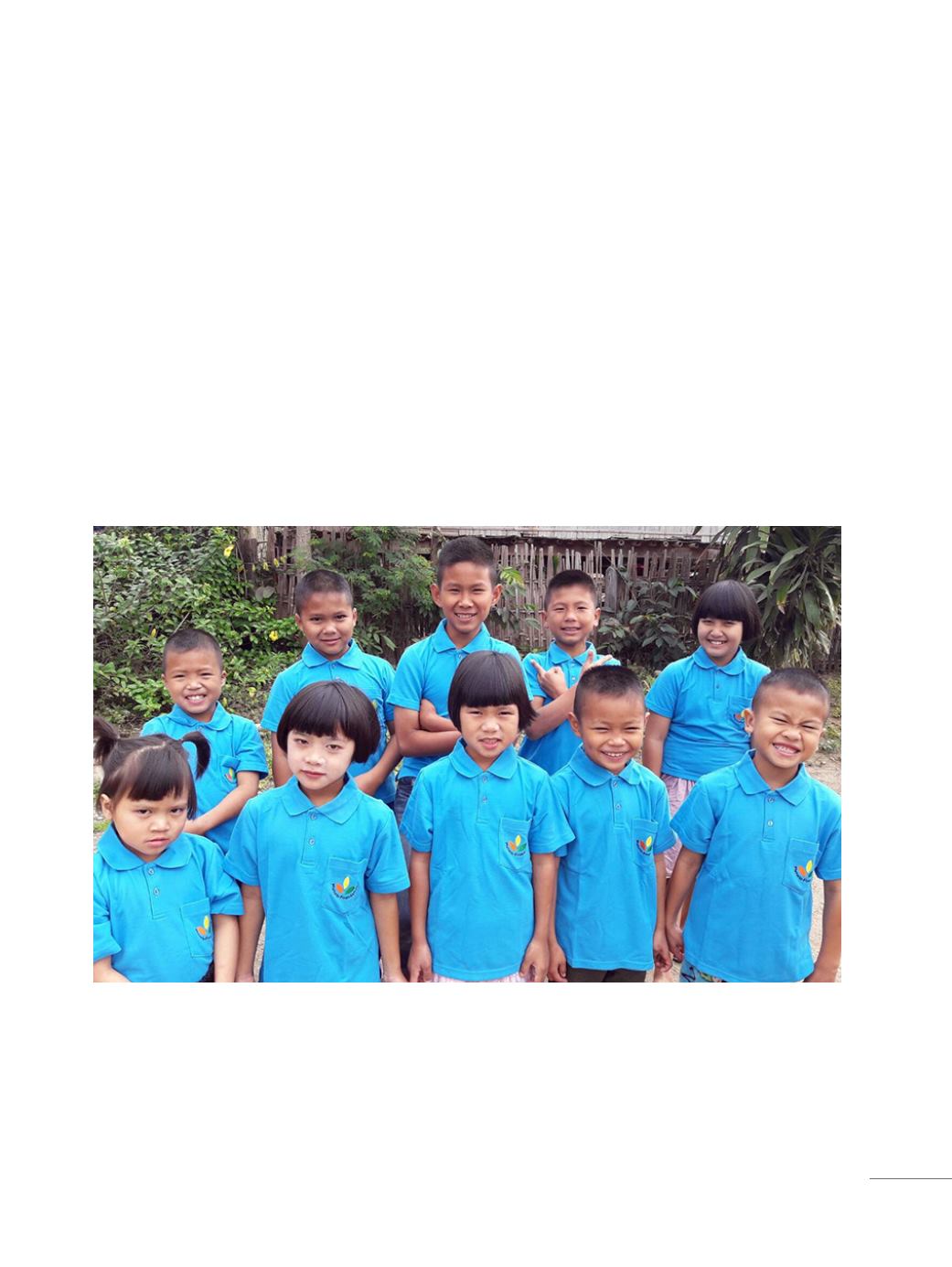
Children Supported by Pistorio Foundation
The Pistorio Foundation decided launch a project in Thailand in 2006 with the aim of helping unprivileged
hill tribe children from remote villages, living in conditions of extreme poverty. The Chiang Rai Village Project
was the first concrete step taken in the country by the Foundation, to allow children in need to access quality
education and to improve the living conditions of communities through the sustainable development of
the entire village. The project is the key activity of the Pistorio Foundation and illustrates our holistic village
approach, through which we do not only provide education to children, but we also contribute to the creation
of village infrastructures that can foster the entire community’s growth and well-being so that it can become
self-sufficient in the medium to long term and provide autonomously for future generations.