


 16 / 21

1 6 | A N N U A L A C T I V I T I E S R E P O R T 2 0 1 6
Pistorio Foundation’s Presence In The
Country
CAMBODIA:
The Back to School Project
Following more than two decades of solid economic growth, Cambodia has reached the lower middle-income status
as of 2015, with gross national income (GNI) per capita reaching US$1,070. Driven by garment and tourism exports,
Cambodia has continued an average growth rate of 7.6 % in 1994-2015, ranking sixth in the world. According to
preliminary estimates, economic growth slightly eased to 6.9 % in 2016, compared to 7% in 2015.
Despite the strong economic growth, and the efforts done along the years to reduce poverty, many challenging
socioeconomic issues still remain. The vast majority of families who escaped from poverty were only able to do so
by a small margin and around 4.5 million people are still living in precarious conditions brushing the line of extreme
poverty. Universal health and education also continue to constitute significant challenges and development priorities
for the country. 33% (around half a million) of children under five are stunted due to health issues and malnutrition.
While net enrollment in primary education increased from 82% in 1997 to 97 % in 2016, at lower secondary level,
completion rates at 43 % in 2013 are significantly below the average for lower middle-income countries. 79 % of
Cambodia’s population (12.3 million people) do not have access to piped water supply and 58 % (9.3 million people)
do not have access to improved sanitation .
3
3
http://www.worldbank.org/en/country/cambodia/overviewPhnom Penh Back to School Project
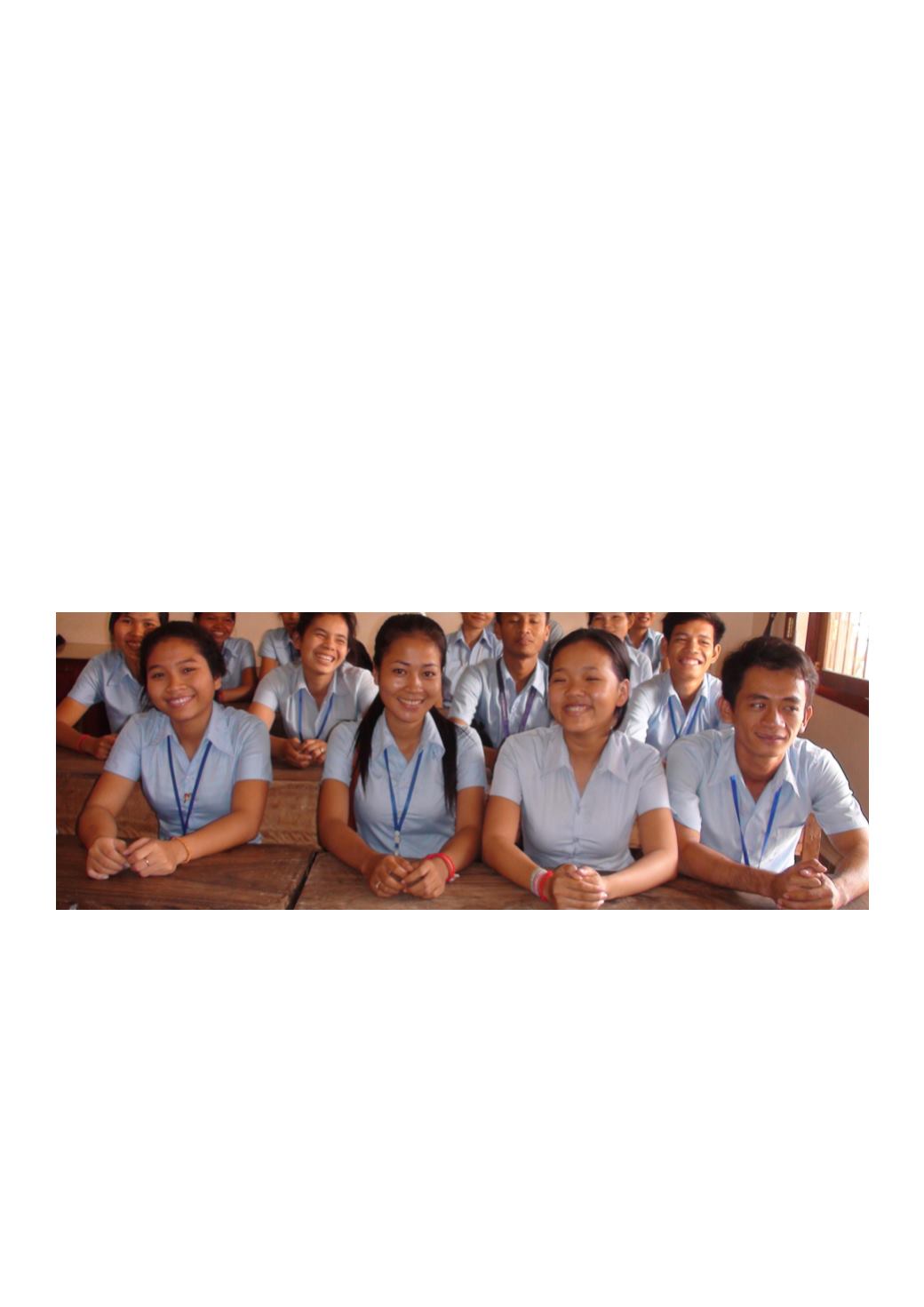
The Pistorio Foundation has partnered with Pour Un Sourire d’Enfant (PSE) since 2006 to contribute to its scholarship
program which has the objective of giving the opportunity to students who due to extreme poverty have been out
of school for many years, to go back to school and have access to an accelerated “catch-up school” program
that allows them to cover two academic years in one. This system gives them the chance in six years to complete
12 years of regular education. Subsequently, beneficiaries enroll in professional school and vocational trainings that
empower them with professional school skills and certification.