


 3 / 20

A N N UA L A C T I V I T I E S R E P O R T | 3
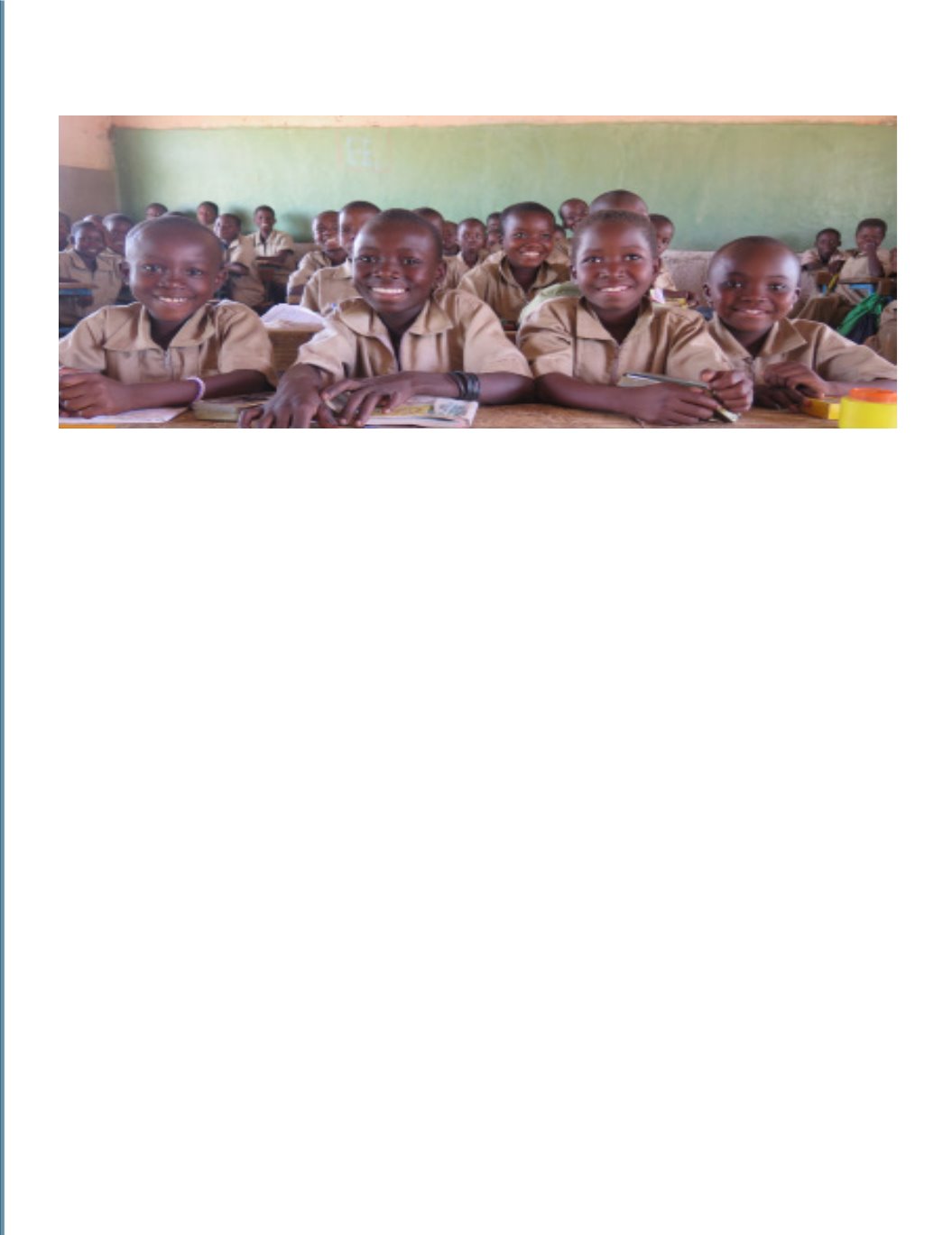
Throughout 2014, the Foundation has continued to extend its
support to nearly 2,000 underprivileged children. In 2006, several
months after its launch, the Foundation started supporting a few
hundred elementary school students in four countries. Over the
years, its support has grown to assisting about 2,000 students
annually.
Since 2006, we have reached 3,500 students and have donated over
13,200 school years. Our programs have impacted over 70,000
indirect beneficiaries including the families of beneficiaries,
school staff, and the village communities that benefit from village
development and school infrastructure projects.
Our mission is to improve the living conditions of children in
the poorest communities and where there is the greatest need.
We believe that it is important to focus on given geographical regions
to empower communities for lasting sustainable development
and effectively lift them out of poverty.
As per our Village Model approach, our intention is to ensure
village communities access to education, health, and sources
of livelihood so that within a decade they are able to sustain
themselves and support their children’s education.
For every community we work with, we first address issues
concerning barriers to education and health of children and
subsequently work with local communities for village development.
The Scholarship Programs provide school age children with what
they need to succeed in school: transport to school, school supplies,
uniforms, basic nutrition provided in school, basic health care
through yearly medical check ups, and dormitory fees if their
schools are far away from their homes.
Scholarship support also includes teacher compensations and
teacher training where needed to improve the quality of education.
We also build and improve school infrastructure complete with
sanitation facilities, kitchen and canteens. We then ensure that
the community has access to clean water and work with villagers
to implement income generating agriculture programs.
• 1 , 9 8 1 u n d e r p r i v i l e g e d c h i l d r e n o n s c h o l a r s h i p
• 3 3 5 S t u d e n t s h a v e a t t a i n e d a P r o f e s s i o n a l S c h o o l D e g r e e
• O v e r 3 5 0 0 d i r e c t b e n e f i c i a r i e s r e a c h e d s i n c e 2 0 0 6
• O v e r 1 3 , 2 0 0 y e a r s o f s c h o o l i n g p r o v i d e d s i n c e 2 0 0 6
• O v e r 4 0 i n f r a s t r u c t u r e p r o j e c t s c o m p l e t e d
• O v e r 3 2 v i l l a g e c o m m u n i t i e s i m p a c t e d
• O v e r 7 0 , 0 0 0 i n d i r e c t b e n e f i c i a r i e s
• 2 0 1 4 B u d g e t : 4 3 2 , 4 8 4 C H F
• 2 0 1 4 A d m i n / O v e r h e a d c o s t s : 6 , 6 2 3 C H F
• Av e r a g e % o v e r h e a d 2 0 0 6 - 2 0 1 4 : 3 %
For every 1$ donation, 1$ is devolved to
projects benefitting children in need.