


 12 / 20

1 2 A N N UA L A C T I V I T I E S R E P O R T
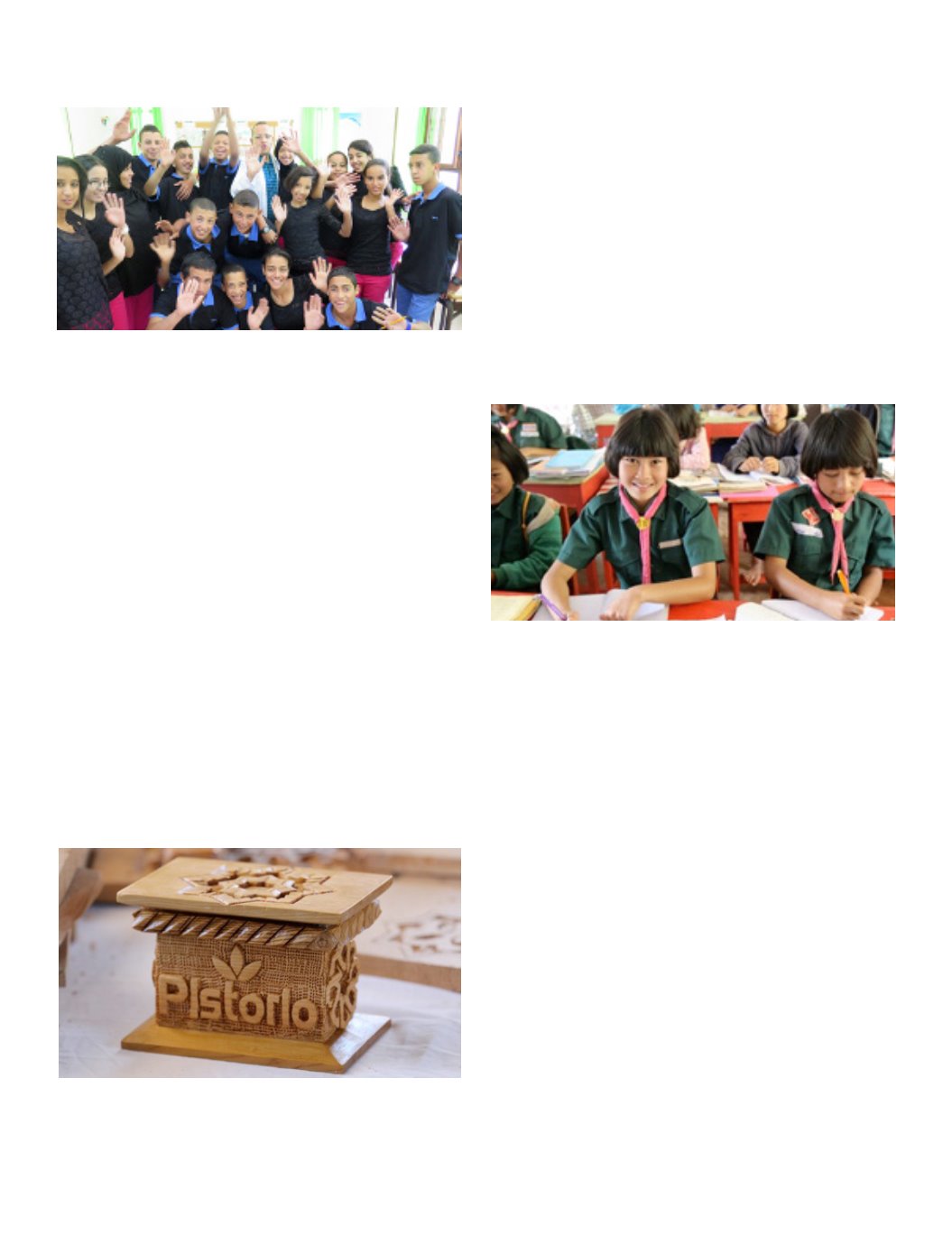
Students of our Non Formal Education Program
Here is a video of the program in 2014, created by our benefi-
ciaries.
https://mail.google.com/mail/u/1/#inbox/14dbf5258975f211?projector=1
We would like to thank volunteer auditor Francesca Ferrari for
the audit missions in Morocco and for the documentations and
photos realized.
Scholarship Program Results:
Retention rate: 90%
Pass rate: 70%
Student teacher ratio: 13; National average: 35
Absentee rate of teachers: less than 5 days per year
2014 Highlights: Minister of Education Rachid Belmokhtar
commended program as being the best Non Formal Education
Program in the country
Outcomes:
Students reintegrated in Public School System in 2014: 14 (3 in
primary, 1 in secondary; 10 in Public Professional School High
Institute for Applied Technologies)
Number of students who completed Professional School in 2014: 7
Number of students who have completed professional school
since 2010: 17 (of which 11 are working and 4 have gone on to
higher studies)
Handcrafted wooden box created by our beneficiaries
Annual Project Investment: 20,000 Euros (20,751 CHF)
CHIANG RAI, THAILAND
Chiang Rai Village Project
• Project Start Date: 2006
• Direct Beneficiaries in 2014: 1836
• Direct Beneficiaries since start of Project: over 3,000
• Professional School Students that have graduated in 2014: 59
• Infrastructure Projects Completed since start of program:
3 Primary Schools, 1 Secondary School, 3 Kindergartens, 7
dormitories, 3 libraries, 3 computer rooms, 5 preschools, 2
playgrounds, arts classroom, 3 canteens, 3 clean water systems
The Chiang Rai Village Project was born out of the need to
improve the enrolment rate of hill-tribe minority groups living
in the mountainous regions of northern Thailand. The project
grew rapidly as with less than 200 CHF per year we were able to
send a child to school for one year, usually the barriers to educa-
tion being the cost of uniforms, school supplies, and transport to
school for extremely poor families. Within five years we reached
over 1,800 beneficiaries. At the same time, we were working to
help villages improve their families’ income generating possibili-
ties through agricultural programs.
The improvement of health and hygiene thanks to school infra-
structures with sanitation facilities, and educating children on
hygiene and access to medical assistance, helped significantly
improve living conditions.
Another positive factor was that in many villages the government,
following the set up of school infrastructure by the Foundation,
has helped improve the roads connecting the villages to main
roads, or connecting the village to the nearest schools.
In 2013, encouraged by the positive results and rapid development
of the villages we have been working with since 2006, we decided
to step up our efforts by setting up our own Foundation Offices
in Chiang Rai with our own dedicated staff. 2014 has been a
year of transition to this new presence and launch of registration
process of the Foundation in Thailand, led by Country Manager,
Giovanni Santavicca.