


 15 / 20

A N N UA L A C T I V I T I E S R E P O R T | 1 5
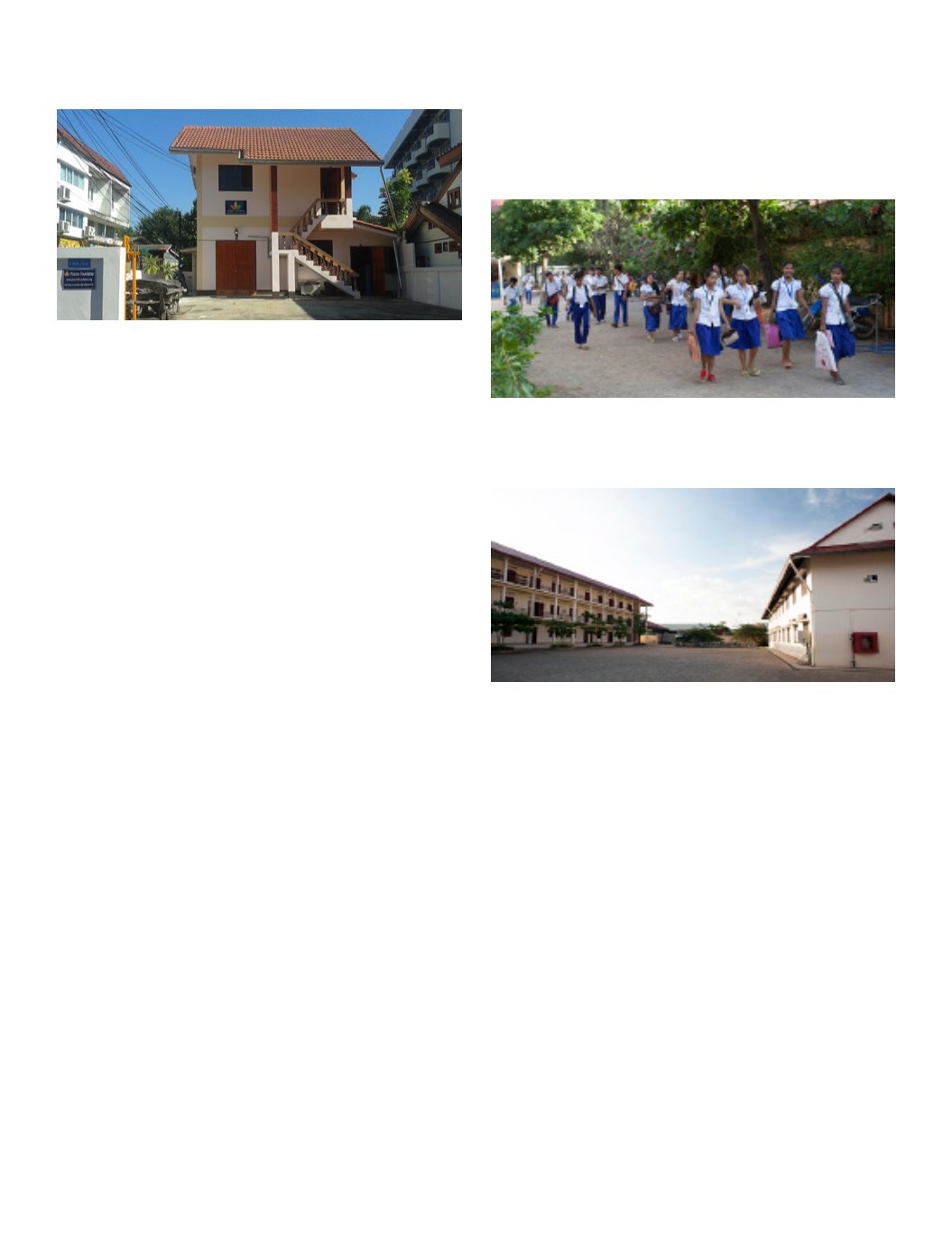
Pistorio Foundation Offices in Chiang Rai
Scholarship Program Results:
Rate of continuation: 93.5%
Pass rate: 95.7%
Program Outcomes:
Number of students who completed Professional School in 2014: 59
Number of students who completed Professional School since
2009: 240
2014 Highlights: Princess Maha Chakri Sirindhorn visited one
of the Foundation Primary Schools in Huay Kuk village.
Nary, a primary school beneficiary, was awarded First Prize in
an international Art Competition and was handed the award by
Princess Maha Chakri Sirindhorn
Arisa, a Professional School student won first prize in a national
Accounting competition.
Annual Project Investment: 350,000 CHF
Project Start Date: 2006
Local Partner: Pour un Sourire D’Enfant (PSE)
Direct Beneficiaries in 2014: 43
Direct Beneficiaries since start of Project: 133
PSE School Campus
The Pistorio Foundation partnered with Pour un Sourire d’Enfant
(PSE) in 2006 and extended its support to 133 underprivileged
children since then. The children come from broken families
in extremely precarious socio economic conditions. They were
out of school and working in the streets as beggars, scavengers,
street vendors, or on constructions sites. At PSE, children are
enrolled in the “Catch up School” which allows them to due two
years of education in one, and therefore complete their entire
schooling in half the time.
The center also is home to many Professional Schools offering
skills in Tailoring, Baking and Pastry Making, Gardening,
Housekeeping, Child minding, Hair Styling and Spa, Plumbing,
F&B, Masonry, and Cooking, Business Studies, and Mechanics
among others. These schools have been set up and run by PSE.
To date, 87 of the students we supported have completed Profes-
sional School, and most of them are working. These alumni now
earn at least three times more than their parents and are able to
assist their families and siblings with additional income. Most
importantly, they have broken their families’ intergenerational
cycle of poverty. They also serve as role models to the younger
generation and incentivize parents to send their school age
children to school.
PHON PENH, CAMBODIA
Back to School Project