


 18 / 25

1 8 | A N N U A L A C T I V I T I E S R E P O R T 2 0 1 5
The Moroccan education system still faces high drop-out
rates, especially in the rural areas. Less than 15 percent
of first grade students are likely to graduate from high
school, also due to low levels of daily attendance, teacher
absenteeism, and a multi-lingual environment at school.
The Foundation has partnered with the Ministry of Educa-
tion and the Azrou Center for Community Development to
tackle this problem, by helping drop out students reinte-
grate into the school system through the government’s
Non Formal Education Program. The Program provides
“catch up” schooling in all formal school subjects so that
two years are taught in one.
The aim is to re-enroll beneficiaries into the public school
system after two to three years of ENF Program. At the
same time, students are introduced to vocational training
classes of their choice, including woodcarving, hairstyling,
embroidery, electrician, or IT. This also gives the chance for
older students to learn vocational skills and be admitted
directly to public Professional School. In addition, students
can do internships in local businesses while enrolled in
the Program.
Since the launch of the program in 2011, seventeen benefi-
ciaries have already successfully completed Professional
School and our now working.
The Moroccan Minister of
Education has cited our center as the most successful
in Morocco in running the ENF Program.
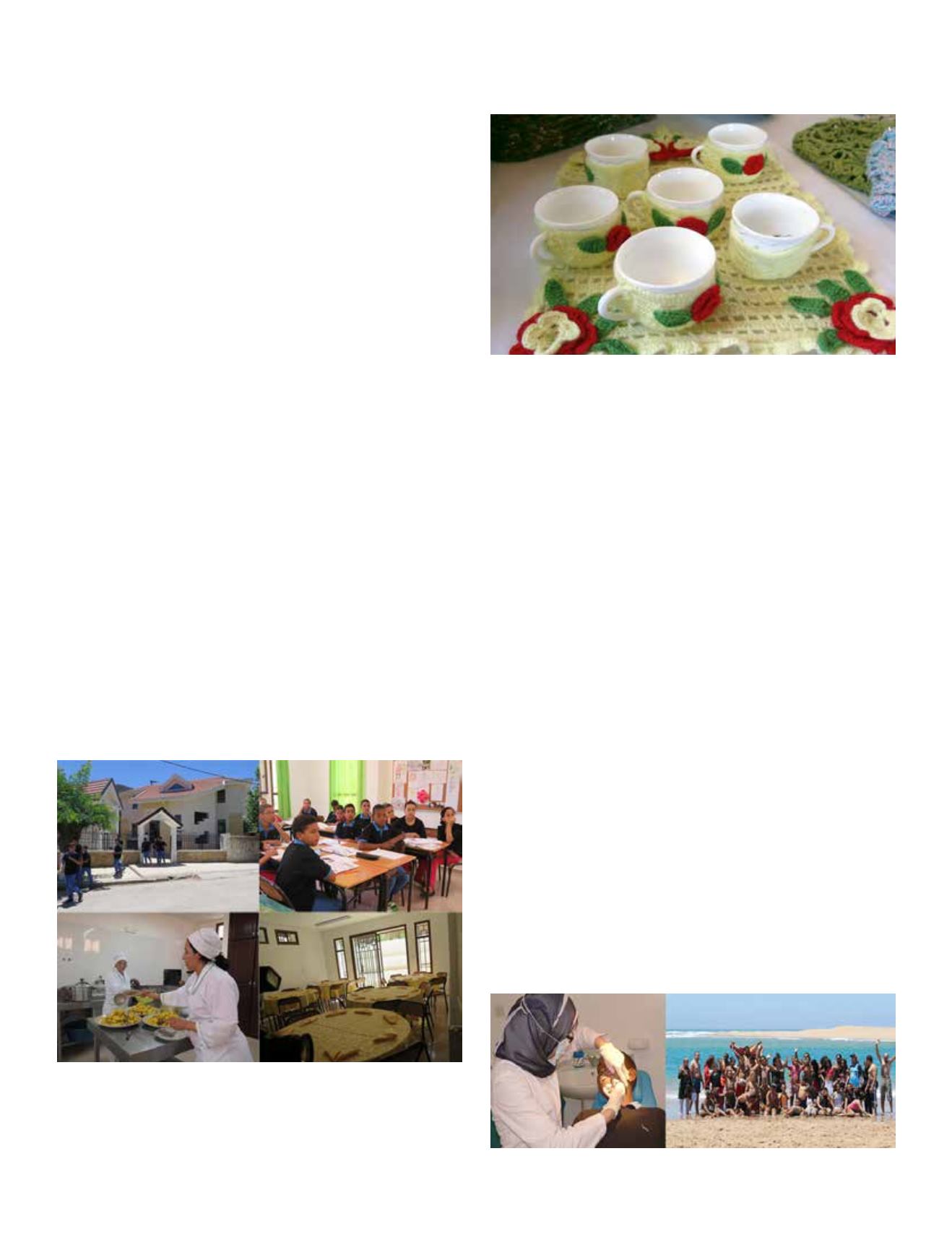
In 2013, the Foundation built a school at our partner’s
premises, the Azrou Center, entirely dedicated to running
the ENF Program. The building consists of classrooms,
workshop rooms, sanitation facilities, kitchen and canteen.
Students’ Scholarships cover teachers’ salaries, meals in
school, backpack, school supplies, cooking staff, trainers,
field trips, sports and cultural events, and general running
costs of program. Beneficiaries receive one meal in
school and basic health care. During the year, through
dedicated workshops, students learn about dental care,
basic hygiene, nutrition, environmental protection, issues
concerning smoking, drug use, Aids, violence, and children’s
rights issues. Children also take part in visual arts, theater,
music and sports activities. Extracurricular activities and
field trips are meant to strengthen the beneficiaries’ self-
esteem, build strong relationships with other classmates,
and improve retention rate. For many, the field trips with
the school represent their first and only opportunities to
travel and sight see.
The quality of education provided at the Program is of
very high standard, with low student/teacher ratio at
20:1 compared 40:1 in public schools and extremely
low absentee rate (less than 5 days a year). Teachers are
able to create a very positive and nurturing environment,
tailored to the needs of individual students, to help them
succeed in school.
Mothers of beneficiaries may attend literacy, numeracy
and vocational training classes at our partner’s Azrou
Center, to improve their income generating capabilities,
and can also access health care screenings. Mothers
are invited to the Center’s Family Planning Counseling
sessions several times during the year during the medical
campaigns.
Creations by students in the Tailoring and Embroidery Vocational Train-
ing Classes
Student dental check up & Yearly beach excursion
School Building built by the Foundation